
Section 1: Principal development
AmCham presses for a defined grid funding stream in Budget 2027, as data centre demand climbs
The American Chamber of Commerce Ireland, whose membership includes Google, Amazon, Meta, Microsoft and Pfizer, submitted its pre-budget recommendations to the Department of Finance on 19 August, calling on Government to build on Budget 2026's grid allocation with a clearly defined funding stream for electricity grid improvements in the budget due this October 1. AmCham chief executive Paul Sweetman framed the request against a global backdrop of intensifying competition for investment, and the submission states that data centres, many operated by AmCham's own hyperscaler members, accounted for almost a quarter of the electricity consumed in the Republic last year and are projected to exceed 30 per cent of national consumption before 2030. The submission also calls for legislative measures to advance wind and solar capacity, framed as insulation against international energy shocks, and follows a Government decision earlier in 2026 to lift the effective moratorium on new data centre grid connections that had been in place since 2021.
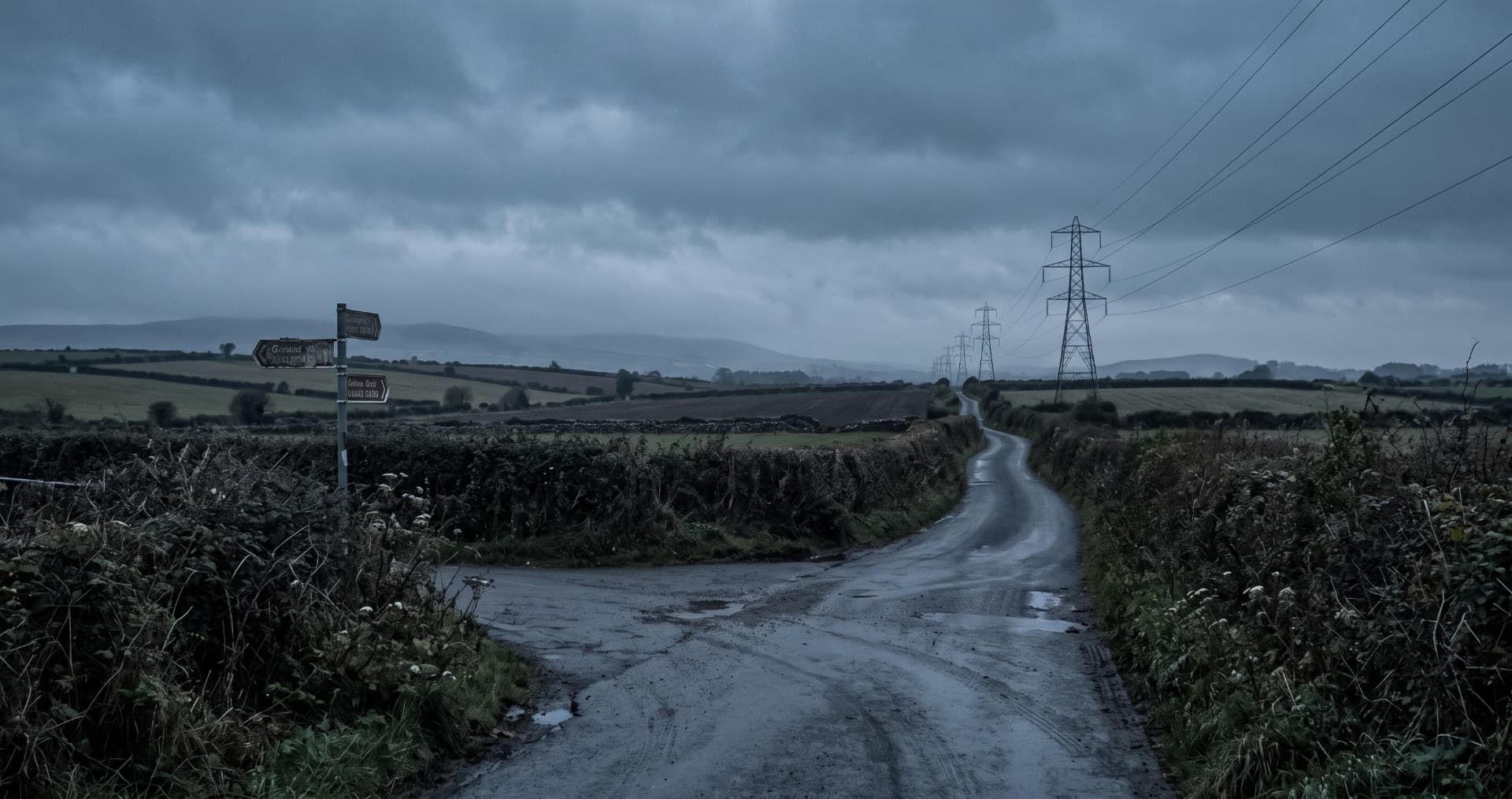
The stakes: Ireland curtailed 15 per cent of available wind generation in the first half of 2026, a measured figure from EirGrid, against 11.3 per cent for all of 2025, and the gap between generation the system builds and generation the grid can actually carry is the same gap into which a growing biomethane injection pipeline must also fit 2.
Who acts? The Department of Finance and the Department of Climate, Energy and the Environment set the budget line, EirGrid and ESB Networks deliver the physical works, and the Commission for Regulation of Utilities approves the network investment plans that translate funding into build.
What do they do? Budget 2027, due in October, either names a ring-fenced grid capital allocation of the kind AmCham has requested or leaves grid funding inside the general capital envelope, where it competes annually against housing, health and transport for the same exchequer resources.
Where the sector sits: Anaerobic digestion depends on the same constrained network that curtails wind and now hosts a rising number of dedicated biomethane entry points, so a grid funded to absorb variable renewable generation is also a grid more able to absorb new injection points as Gas Networks Ireland works through its contracted producer pipeline.
Section 2: Energy market
Carbon price holds above the reform level through a quiet fortnight
The average EU Emissions Trading System allowance price across the six months to the end of July 2026 stood at €74.66, with spot prices exceeding €80 a tonne at the start of August, a level the market has now sustained through the summer trading period 3. A survey of nine analysts published earlier in the year forecast an average price near €80 for 2026 as a whole, with institutional forecasts for the year ranging as widely as €80 to €147, reflecting genuine uncertainty over the pace of decarbonisation and the scale of the market's own tightening measures, with no single consensus view yet established 4.
Section 3: Anaerobic digestion and circular bioeconomy
Europe's biomethane fleet passes 1,975 plants as Denmark's grid nears saturation
The European Biogas Association's European Biomethane Map 2026, published on 1 July in cooperation with Gas Infrastructure Europe, recorded installed European biomethane production capacity of 8.2 billion cubic metres a year at the end of the second quarter of 2026, an increase of more than 1 billion cubic metres, or 17 per cent, on 2025 5. The number of operating plants rose from 1,678 to 1,975 over the same period, 327 newly commissioned, and the association recorded investment commitments of €36 billion, against €28 billion the previous year, which it estimates could add a further 9 billion cubic metres of capacity by 2030 if fully realised. Denmark remains the sector's most advanced national case: biogas supplied approximately 40 per cent of the methane injected into the Danish gas grid as of early 2026, and on 4 July domestic biogas production exceeded the country's total gas consumption for a full day, a first for the Danish network 6.
Section 4: Carbon, MRV and climate claims
Northern Lights signs buyers across four countries as its transport fleet completes
The Northern Lights joint venture between Equinor, Shell and TotalEnergies took delivery of its fourth dedicated liquefied carbon dioxide carrier, Northern Purpose, in May 2026, completing the vessel fleet built for the first phase of its carbon capture and storage transport and storage operation off the Norwegian coast 7. The joint venture has signed commercial agreements with Yara in the Netherlands, Ørsted in Denmark, Stockholm Exergi in Sweden and Inherit in Norway, covering captured carbon dioxide transported by ship from industrial sources across north-west Europe to permanent geological storage in Norway, with capacity expected to expand toward approximately 5 million tonnes a year by 2028 8.
Section 5: Agriculture and Scope 3
Commission's first Nitrates Directive review since 1991 keeps the manure limit, and its language on derogations, unchanged
The European Commission published, on 15 July, its first full evaluation of the Nitrates Directive since the directive's adoption in 1991, concluding that the existing limit of 170 kilograms of manure nitrogen per hectare remains effective and scientifically sound, while describing derogations from that limit, including the 220 to 250 kilograms per hectare ceiling available to Irish derogation farmers, as a tool for flexibility that must be used carefully because it may affect the directive's overall effectiveness 9. The review states that additional conditions attached to derogations have had some positive environmental effect but have also created expectations and entrenched derogated farms in high nutrient-output farming that may have proved damaging over time, and it confirms the Commission is preparing an initial scientific assessment, due later in 2026, on extending RENURE criteria to manure-based liquid digestate, a step the European Biogas Association's May report described as a game changer for plant viability and environmental groups have opposed as a further weakening of the directive's core safeguard 10.
Section 6: Counter-signal
Section 7: Scholarly Spotlight
The finding
Tsiaras, Tampekis and Gavrilakis, publishing in World in 2025, surveyed 320 residents of the Epirus region of Greece on their attitudes to photovoltaic and wind energy installations, using a structured questionnaire administered across urban and rural areas and subdivided between locations with and without direct visual exposure to renewable energy infrastructure. The authors found that urban residents showed greater acceptance of renewable energy sources overall, while rural residents living near installations expressed more scepticism, grounded largely in aesthetic concerns and a perceived lack of procedural fairness in how the projects reached their sites. Statistical analysis confirmed that younger and more educated respondents were consistently more supportive and better informed. A distinct finding concerned information itself: misinformation and low awareness of renewable energy technology were concentrated specifically in areas with no visual contact with existing installations, meaning the residents least exposed to the reality of a wind or solar project were also the ones working from the least accurate picture of what one involves 14.
The context
The pattern this study documents, that opposition concentrates near a proposed site while the loudest misinformation sits furthest from it, matches almost exactly the shape of this issue's Counter-signal item at Ballyvass, where sixteen formal observations from residents directly adjacent to the proposed plant centred on specific, checkable claims: traffic counts, road width, hydrological risk. The Castledermot group's objection was not generalised opposition to anaerobic digestion; it was a proximate, evidence-based challenge to a specific set of claims made in a specific planning application, exactly the profile of resistance the Epirus study associates with communities that have direct visual and physical exposure to a site rather than an abstract sense of the technology.
The limitation
A single Greek region surveyed by structured questionnaire gives a cross-sectional snapshot, and it cannot establish causation between visual exposure and acceptance on its own, and the 320-respondent sample, while subdivided by geography, was not designed to isolate the effect of an anaerobic digestion facility specifically, since the underlying installations were photovoltaic and wind. Odour, traffic and biosecurity concerns particular to anaerobic digestion do not appear in this dataset at all, and a finding drawn from solar and wind siting in one Mediterranean region should not be extended uncritically to a slurry-fed plant on a rural Irish road without direct evidence that the same mechanisms apply.
The implication
A developer who reads community objections as a proxy for general anti-renewables sentiment will misdiagnose the problem this study describes. The residents with the strongest and best-informed objections are, on this evidence, the ones nearest the proposed site and most exposed to its specific, checkable details, and an early, detailed, site-specific consultation process carries more weight toward the eventual planning outcome than a public information campaign aimed at a wider, more distant audience.
Section 8: Commercial opportunities
Deadline: 22 September 2026
Covering bio-based value chains, the circular bioeconomy and agri-food systems. 16
Expression of interest expected Q3 2026
Up to €200m secured through the National Development Plan for grant rounds running 2026 to 2030, administered by the Department of Climate, Energy and the Environment. 17
Purchase obligation applies from February 2027
Authorised declarants should confirm registration arrangements with their member state's competent authority ahead of the platform opening. 18
Methodologies adopted 3 February 2026, Puro.earth programme open
Operators can assess digestate pyrolysis and carbon dioxide capture against the QU.A.L.ITY criteria and the 200-year permanence threshold. 19
20 to 21 October 2026, pre-registration open
Held at the Convention Centre Dublin during Ireland's Presidency of the Council of the European Union. 20
Held October 2026, registration open
Fourth edition, with a keynote from Commissioner for Energy and Housing Dan Jørgensen and a focus on biomethane's role in EU energy independence. 21
Section 9: The Standing Watch
| Issue | Status at 21 August 2026 | Movement |
|---|---|---|
| Renewable Heat Obligation commencement | Redesign of the multiplier the Commission flagged in March remains pending; 2027 stays the working assumption | Unchanged |
| Nitrates derogation review | Commission published its first full Nitrates Directive evaluation since 1991 on 15 July, retaining the 170kg N/ha limit and flagging derogations for closer scrutiny | Moved |
| CBAM implementing detail | Certificate purchase obligation stands for February 2027; the sale and repurchase delegated regulation remains in draft | Unchanged |
| National AD planning guidance | Support document still in preparation; the Ballyvass appeal has now passed its own statutory decision date without ruling, the third such case this brief has tracked | Unchanged |
| Second-round AD capital grants | Expression of interest still expected in the third quarter of 2026 | Unchanged |
| CRCF methodology adoption | Unchanged since the first permanent methodologies were adopted 3 February 2026 | Unchanged |
| Ireland and the London Protocol export amendment | Ireland remains outside the ratifying states; Northern Lights' expanding buyer base in four ratifying countries widens the practical gap this creates | Unchanged |
| Grid capacity funding for Budget 2027 | New this week: AmCham's 19 August submission calls for a defined grid capital funding stream, to be decided in the October budget | Moved |
Section 10: Where this lands
The Ballyvass case and this week's Scholarly Spotlight both point to the same conclusion: objections from residents closest to a site tend to be specific and checkable, seldom just generalised unease, and an application that under-documents traffic, hydrology or road capacity invites exactly the kind of scrutiny that produced a refusal at Ballyvass and appeal delays at Corracunna and Killough. Civitas by Climaticus is built on the peer-reviewed social licence literature this Spotlight belongs to, and structures engagement before an application is lodged rather than after a concern group has formed.
Northern Lights' buyer base across four ratifying countries demonstrates what a settled cross-border transport regime unlocks commercially, and the same opportunity remains unavailable to an Irish capture point while ratification stays unresolved.
Sources cited in this issue
- Irish Times, US multinationals call for 'clearly defined' funding for energy grid improvements in Budget 2027, 19 August 2026: irishtimes.com ↩
- Wind Energy Ireland, Ireland lost 15 per cent of wind power in first half of 2026, 28 July 2026: windenergyireland.com ↩
- GMK Center, European carbon prices exceeded €80/t at the start of August, 2026: gmk.center ↩
- ABN AMRO, Carbon Market Strategist: carbon prices heat up in 2026: abnamro.com ↩
- Bioenergy Insight, Europe's biomethane capacity passes 8 bcm as investment commitments reach €36 billion, 1 July 2026: bioenergy-news.com ↩
- Bioenergy Insight, Biogas takes up 40% of methane in Denmark's natural gas grid, 2026: bioenergy-news.com ↩
- Marine Link, Northern Lights CCS fleet set for next stage with latest LCO2 carrier arrival, 2026: marinelink.com ↩
- Offshore Industry, Northern Lights Phase 2: Europe's CCS backbone moves toward 5 million tonnes, 2026: offshoreindustry.co.uk ↩
- Agriland, New EU review of nitrates rules backs manure N limit, 15 July 2026: agriland.ie ↩
- European Biogas Association, New report positions digestate at the heart of Europe's fertiliser resilience and circular economy ambitions, May 2026: europeanbiogas.eu ↩
- Agriland, Kildare County Council denies planning permission for AD plant, 2025: agriland.ie ↩
- Agriland, Biomethane company appeals planning refusal for Kildare AD plant, 2025: agriland.ie ↩
- Kildare Nationalist, Kildare community submit observations against biogas plant, 25 November 2025: kildare-nationalist.ie ↩
- Tsiaras, E., Tampekis, S. and Gavrilakis, C. (2025) Public Perceptions and Social Acceptance of Renewable Energy Projects in Epirus, Greece. World, 6(3), 111: doi.org ↩
- Correction notice, World, 7(1), 12 (2026): doi.org ↩
- CBE JU, €170.7m 2026 call for proposals: cbe.europa.eu ↩
- Agriland, Process for next round of biomethane capital grants to begin soon: agriland.ie ↩
- Regulatory Compliance, EU: Carbon border adjustment mechanism (CBAM) certificates – sale and repurchase, 15 July 2026: regulatory-compliance.eu ↩
- Carbon Herald, Puro.earth launches new CRCF programme: carbonherald.com ↩
- Global Bioeconomy Summit 2026: gbs2026.org ↩
- European Biomethane Week 2026: europeanbiomethaneweek.eu ↩
- The Climaticus Brief, issue of 14 August 2026: climaticus.ie/briefings/14August2026 ↩

Keeping up with Climaticus
Sign up to receive a monthly newsletter with the most important news and research from the briefings and beyond.
Your email will be used only to send the Climaticus monthly newsletter. You can unsubscribe at any time.