
Section 1: Principal development
Gas Networks Ireland connects Bia Energy's Huntstown plant, the first dedicated biomethane connection
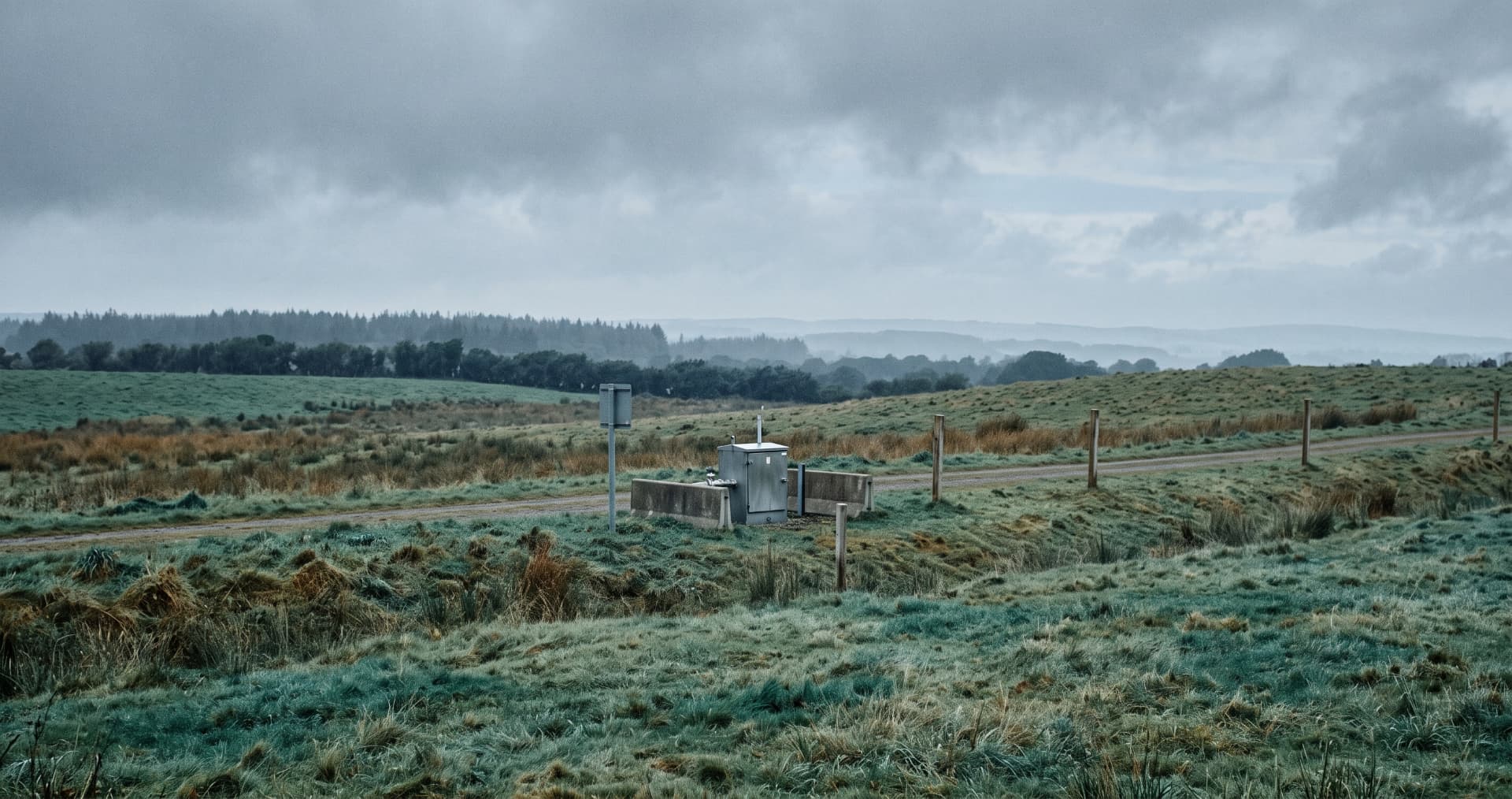
Gas Networks Ireland connected Bia Energy's Huntstown biomethane facility directly to its network on 12 August, the first of the seven producer connections it holds under contract, following the construction of a network extension and a dedicated biomethane entry facility built specifically to serve the plant 5. Bia Energy, part of the Sretaw group founded by Eamon Waters, invested €90 million in the Huntstown plant and received almost €3.9 million from the government's National Biomethane Capital Grant Scheme towards its capital costs 6. The facility processes surplus packaged food from retail and hospitality alongside agricultural and food production waste through anaerobic digestion, and Bia Energy chief executive Brendan Traynor said the Dublin facility alone will displace approximately 3,000 tonnes of chemical fertiliser a year through the digestate it produces 6. Gas Networks Ireland's head of business development Karen Doyle confirmed the company holds connection agreements with seven biomethane producers, including Bia Energy, with further contracts at an advanced stage of discussion 2.
The stakes: Gas generates about half of the Republic's electricity and carries substantial industrial and commercial heating load, and the 5.7 TWh 2030 biomethane target depends on connecting a pipeline of plants of which Huntstown is the first case study for the dedicated connection model working at scale 6.
Who acts? Gas Networks Ireland, Bia Energy and the Sretaw group carried the connection through, with the Department of Agriculture, Food and the Marine funding the capital grant and Minister for Agriculture, Food and the Marine Martin Heydon attending the launch.
What do they do? Gas Networks Ireland now applies the Huntstown connection model to its remaining six contracted producers, including Stream BioEnergy's €80 million facility under construction at Little Island, Co Cork, due to become operational in 2027 7.
Where the sector sits: Anaerobic digestion supplies the feedstock this connection exists to carry, and the pace at which Ireland can build a dedicated entry facility for each new plant, instead of aggregating output through shared injection points, will decide how quickly the 5.7 TWh target becomes deliverable and not merely declared.
Section 2: Policy and regulation
2.1 CBAM certificate purchase obligation confirmed for February 2027
Authorised importers under the Carbon Border Adjustment Mechanism will be required to purchase CBAM certificates from the member state in which they are established from February 2027, under Article 20 of Regulation (EU) 2023/956, which establishes a common central platform for the sale and repurchase of certificates operated by the European Commission following a joint procurement agreement with member states that entered into force on 16 December 2025 8. The Commission's draft delegated regulation setting out how the platform will sell and repurchase certificates closed for consultation on 6 August, as reported in last week's issue, and the rules governing the platform's operation, including fees and timing, remain to be finalised before the February 2027 deadline 9.
2.2 Oireachtas committee report keeps pressure on the Renewable Heat Obligation
The Joint Oireachtas Committee on Agriculture and Food published its report on anaerobic digestion on 3 July, recommending enactment of the Renewable Heat Obligation Bill and longer-term projections for the scheme, and the Renewable Gas Forum Ireland said the priority must now shift decisively from policy development to accelerated delivery 10. The recommendation carries no legal force, and it lands on a Bill still awaiting redesign after the European Commission's Detailed Opinion of 29 March found the multiplier favouring indigenously produced biomethane incompatible with internal market rules, with commencement now expected in 2027 against the mid-2026 date originally targeted 11.
Section 3: Anaerobic digestion and circular bioeconomy
Gas Networks Ireland's contracted pipeline moves from paper to plant
Huntstown is the first of seven contracted connections Gas Networks Ireland is working through, and the next in sequence is Stream BioEnergy's €80 million facility at Little Island, Co Cork, currently under construction and expected to become operational in 2027 7. The Cork plant will process approximately 90,000 tonnes of domestic and commercial food and garden waste a year to produce 80 GWh of biomethane, enough to meet the annual heating demand of about 6,000 homes, and Gas Networks Ireland describes it as Ireland's largest biomethane plant built on mixed food and garden waste 7. Separately, Greengate Biogas has continued preparing a planning application for a 700,000 tonne slurry-fed facility at Powerstown, Co Carlow, designed to produce approximately 250 GWh of biomethane alongside captured biogenic carbon dioxide, though the application had not been lodged at the time of writing 12.
Section 4: Carbon, MRV and climate claims
Commission clarifies methane import compliance and recommends a penalty grace period
The European Commission issued two Recommendations on 20 July concerning Regulation (EU) 2024/1787, the EU Methane Regulation, addressing how importers of crude oil, natural gas and coal can demonstrate compliance with import requirements that take effect on 1 January 2027 13. The first Recommendation sets out two compliance pathways alongside direct tracing: a trace-and-claim model, where methane information follows commercial transactions through intermediaries and trading hubs, and a certification model, where an independent provider confirms a specified quantity of energy meets requirements without the importer tracing physical delivery, a distinction the Commission says addresses the particular difficulty of establishing producer-level equivalence for liquefied natural gas volumes originating in the United States. The second Recommendation asks member states to withhold penalties for importer breaches of reporting, equivalence and methane intensity obligations arising in 2027, 2028 and 2029, excluding fraudulent breaches, citing the requirement in Article 33(2) of the Regulation that penalties must not endanger security of energy supply.
Section 5: Agriculture and Scope 3
Digestate's fertiliser potential meets this week's feedstock question
The European Biogas Association's Digestate in Europe: State of Play in 2026, published 21 May to coincide with the European Commission's Fertiliser Action Plan, estimates that anaerobic digestion plants across Europe produced approximately 25 million tonnes of digestate dry matter in 2024, with manure supplying around 60 per cent of inputs, and calculates that this volume could technically replace more than 16 per cent of the mineral nitrogen fertiliser used in European agriculture, alongside up to 30 per cent of phosphorus and 10 per cent of potassium demand 14. The report projects nutrient potential from digestate reaching 9.7 million tonnes of nitrogen, 1.7 million tonnes of phosphorus and 0.8 million tonnes of potassium by 2050, with the environmental and nutrient value of current digestate output estimated at more than €1 billion a year, and it names extending RENURE criteria to digestate as a near-term action within the Commission's plan 14.
Section 6: Planning and social licence
A second postponement at Corracunna leaves the appeal timeline open
An Coimisiún Pleanála confirmed on 28 July that it could not meet its own revised deadline of 29 July to determine the planning appeal for the proposed anaerobic digestion facility at Corracunna, Mitchelstown, Co Cork, the second postponement after an earlier deadline of 6 May was also missed 15. The commission cited the complexity of the case in its letter to Cork County Council and gave no revised decision date, saying only that the appeal would be determined as soon as possible. The delay follows a separate appeal for a biomethane plant at Killough, near Horse and Jockey, Co Tipperary, where An Coimisiún Pleanála confirmed in July that it could not issue a decision before 30 September 16.
Section 7: Scholarly Spotlight
The finding
Sahota, Geoghegan and O'Donoghue, publishing in Energy Conversion and Management in March 2026, model the economics of large-scale anaerobic digestion investment in Ireland. The authors, based at the University of Galway, combined deterministic modelling with a Monte Carlo simulation of 10,000 iterations to test three plant capacities, 10, 20 and 40 GWh a year, running on grass silage and cattle slurry, against four financial measures: levelised cost of biomethane, net present value, internal rate of return and payback period. Their central finding is that returns scale sharply with plant size. Capital costs rise from €2.9 million at 10 GWh to €7.9 million at 40 GWh, but per-unit connection and grid modification costs fall as scale increases, and the 40 GWh plant delivers a net present value of approximately €22.2 million, a 30 per cent internal rate of return and a 3.2-year payback, against a 16 per cent return and a 6.7-year payback at 10 GWh. The probability of a positive net present value rises from 81 to 92 per cent across that same range.
The context
Huntstown's contracted 120 GWh sits above the largest capacity this study actually tested, so its specific economics remain unproven by this model, but the direction of the finding, that scale de-risks the investment, helps explain why Ireland's most advanced projects to date, Huntstown and the Cork facility under construction at Little Island, have both been built well above the smallest scales this study finds financially fragile. Gas Networks Ireland's remaining six contracted producers, most smaller than Huntstown, sit closer to the range this paper actually modelled, and its findings suggest their economics carry materially more risk than the flagship connection reported this week.
The limitation
The study tests three discrete capacities rather than a continuous range, so plants sized between or beyond them, including Huntstown's, are not directly evidenced. Its sensitivity analysis varies two inputs, the cost of grass silage and the price of biomethane, and the published abstract does not state that digestate revenue, electricity price, the cost of capital, feedstock transport distance or planning and connection timelines were tested with the same rigour, each of which affects the return an operator books. The analysis is confined to a single country and a single feedstock combination, grass silage and cattle slurry, so its findings should not be extended to plants running on food waste or municipal collection, including the two most advanced Irish projects reported elsewhere in this issue.
The implication
A buyer or lender assessing a biomethane offtake or debt package should treat plant scale as a risk indicator in its own right, not only as a determinant of volume. A developer structuring a project below roughly 20 GWh should expect materially higher financing costs or tighter covenant terms than a comparable project at 40 GWh, and may need blended finance, feedstock aggregation across multiple holdings, or risk-sharing structures to reach the return profile this study finds achievable only at the larger end of its range.
Section 8: Commercial opportunities
Deadline: 22 September 2026
Covering bio-based value chains, the circular bioeconomy and agri-food systems. 17
Expression of interest expected Q3 2026
Up to €200m secured through the National Development Plan and the Infrastructure, Climate and Nature Fund for grant rounds running 2026 to 2030. 18
Purchase obligation applies from February 2027
Authorised declarants should confirm registration arrangements with their member state's competent authority well ahead of the platform opening. 8
Methodologies adopted 3 February 2026, Puro.earth programme open
Operators can assess digestate pyrolysis and carbon dioxide capture against the QU.A.L.ITY criteria and the 200-year permanence threshold. 19
20 to 21 October 2026, pre-registration open
Held at the Convention Centre Dublin during Ireland's Presidency of the Council of the European Union. 20
Section 9: The Standing Watch
| Issue | Status at 14 August 2026 | Movement |
|---|---|---|
| Renewable Heat Obligation commencement | Oireachtas Committee recommended enactment on 3 July, but the redesign the Commission requires remains pending; 2027 stays the working assumption | Unchanged |
| Nitrates derogation review | 2025 nutrient monitoring record published 5 August remains under Commission consideration; no further movement this week | Unchanged |
| CBAM implementing detail | Certificate purchase obligation confirmed for February 2027; the sale and repurchase delegated regulation remains in draft after consultation closed 6 August | Moved |
| National AD planning guidance | Support document still in preparation by the biomethane implementation sub-group, expected during 2026; Corracunna and Killough appeals both missed self-set deadlines this summer | Unchanged |
| Second-round AD capital grants | Expression of interest still expected in the third quarter of 2026 | Unchanged |
| CRCF methodology adoption | Unchanged since the first permanent methodologies were adopted 3 February 2026 | Unchanged |
| Ireland and the London Protocol export amendment | Ireland remains outside the ratifying states; the Commission's position that the EU framework satisfies Article 6(2) remains contested | Unchanged |
| EU Methane Regulation import compliance | Commission issued two Recommendations on 20 July setting out compliance pathways and a recommended penalty grace period for 2027 to 2029; the underlying obligations still apply from 1 January 2027 | Moved |
Section 10: Where this lands
Bia Energy's connection adds up to 120 GWh a year of grid-injected biomethane once the plant reaches full capacity, the first volume to reach the network through a connection built for a single producer. The Biogenia Marketplace carries the connection and offtake intelligence for buyers assessing this new supply as it comes online.
Authorised declarants face a fixed purchase obligation from February 2027 under a platform whose operating rules remain in draft, and the gap between the deadline and the detail argues for engaging with the consultation process now, ahead of the final delegated regulation.
Footnotes
- Gas Networks Ireland, “Gas Networks Ireland Connects First Biomethane Plant Directly to the National Gas Network”, 12 August 2026: gasnetworks.ie ↩ ↩
- Bioenergy Insight, “Gas Networks Ireland connects first direct biomethane producer”, 12 August 2026: bioenergy-news.com ↩ ↩
- William Fry, “Biomethane Production Facilities in Ireland”, 19 March 2026: williamfry.com ↩
- Gas Networks Ireland, Renewable Gas Policy / National Biomethane Strategy: gasnetworks.ie ↩
- Agriland, Biomethane plant connected to gas network for first time in Ireland, 12 August 2026: agriland.ie ↩
- Irish Times, Gas Networks Ireland connects first biomethane producer, 12 August 2026: irishtimes.com ↩ ↩ ↩
- Gas Networks Ireland, Gas Networks Ireland to connect new €80 million biomethane plant in Cork to national gas grid, 19 May 2026: gasnetworks.ie ↩ ↩ ↩
- Regulatory Compliance, EU: Carbon border adjustment mechanism (CBAM) certificates – sale and repurchase, 15 July 2026: regulatory-compliance.eu ↩ ↩
- European Commission Taxation and Customs Union, Carbon Border Adjustment Mechanism: taxation-customs.ec.europa.eu ↩
- Renewable Gas Forum Ireland, Oireachtas Report must become catalyst for biomethane delivery, July 2026: renewablegasforum.com ↩
- William Fry, Ireland's Renewable Heat Obligation, May 2026: williamfry.com ↩
- Greengate Biogas, Powerstown: greengatebiogas.ie ↩
- Herbert Smith Freehills Kramer, EU Methane Regulation: Commission clarifies compliance options and recommends three-year penalty grace period, 6 August 2026: hsfkramer.com ↩
- Bioenergy Insight, Digestate could replace significant share of Europe's mineral fertiliser use, EBA report finds, 21 May 2026: bioenergy-news.com ↩ ↩
- The Avondhu, Corracunna biogas decision delayed again, 12 August 2026: avondhupress.ie ↩
- Tipp Mid West Radio, An Coimisiún Pleanála confirms delay in planning appeal decision on biomethane plant at Killough, 10 July 2026: tippmidwestradio.com ↩
- CBE JU, €170.7m 2026 call for proposals: cbe.europa.eu ↩
- Irish Farmers Journal, Renewed optimism as Minister reaffirms AD plans, 1 July 2026: farmersjournal.ie ↩
- Carbon Herald, Puro.earth launches new CRCF programme: carbonherald.com ↩
- Global Bioeconomy Summit 2026: gbs2026.org ↩
Further sources consulted
- IFSC, Ireland committed to 5.7 TWh of indigenous biomethane by 2030: ifsc.ie
- Gas Networks Ireland, Biomethane Producers: Connecting to Ireland's Gas Network (GNI_BP_02/26): gasnetworks.ie
- Sahota, S., Geoghegan, C. and O'Donoghue, C. (2026) Probabilistic techno-economic assessment of large-scale anaerobic digestion plants for biomethane production: de-risking biomethane futures. Energy Conversion and Management: doi.org
- University of Galway research portal, publication record: research.universityofgalway.ie
- European Commission, EU sets world's first standard for permanent carbon removals, 3 February 2026: climate.ec.europa.eu
- The Climaticus Brief, issue of 7 August 2026: climaticus.ie

Keeping up with Climaticus
Sign up to receive a monthly newsletter with the most important news and research from the briefings and beyond.
Your email will be used only to send the Climaticus monthly newsletter. You can unsubscribe at any time.