
Section 1: Principal development
Ireland opens a trucked-gas injection hub in Cork while the demand rules for its output remain unpublished
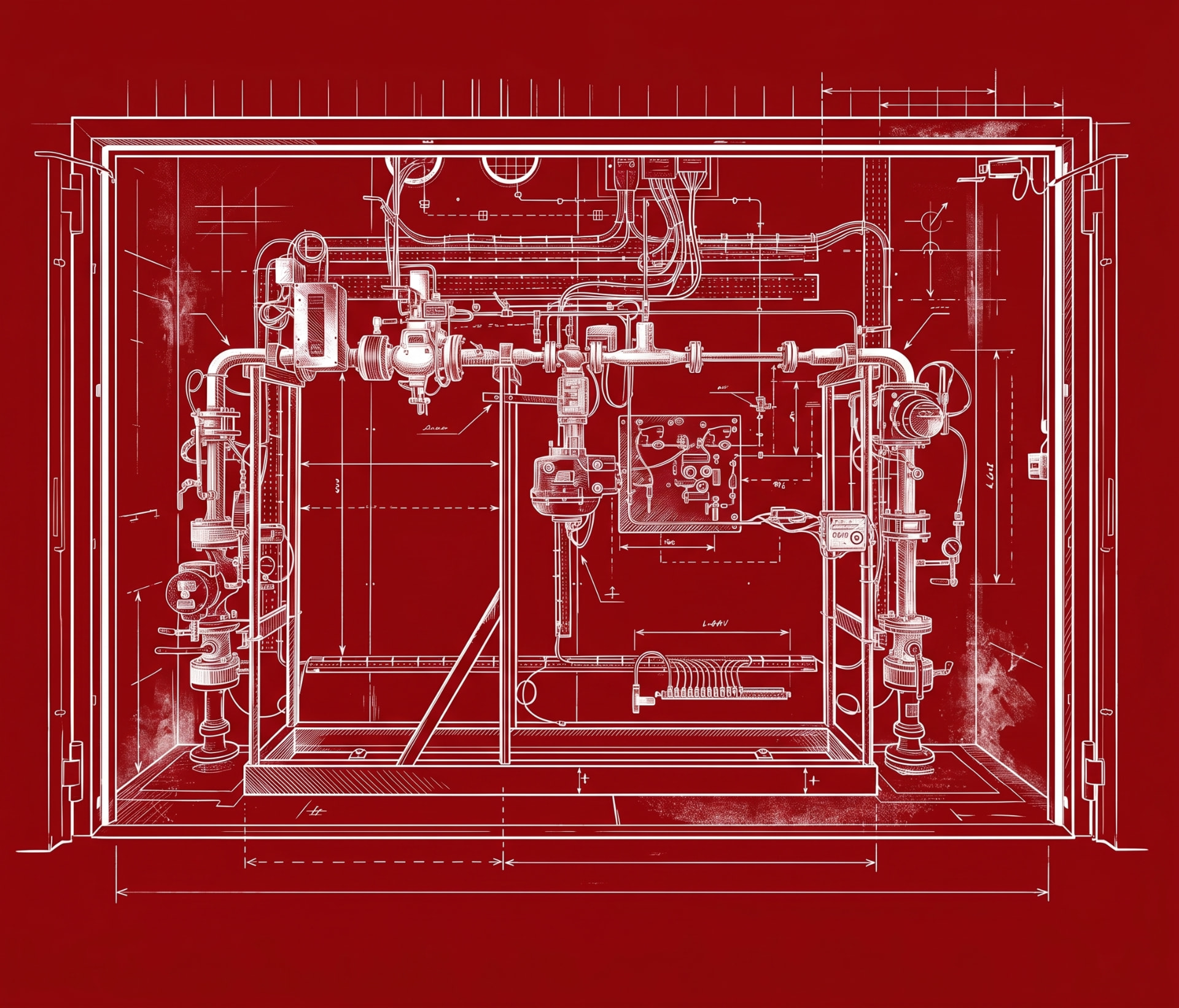
Taoiseach Micheál Martin opened the Mitchelstown facility on 2 October 2026, and Gas Networks Ireland describes it as the first of its kind in Ireland and Europe [1][2]. Producers too distant from the gas network to connect by pipeline deliver biomethane to the site by trailer, where it is prepared to the grid standard and injected, and the company estimates carbon dioxide savings of about 130,000 tonnes a year at full capacity (company estimate) [1][2]. The facility forms part of the GRAZE project, which received €8.4 million from the Climate Action Fund, and construction followed a sod-turning in October 2024 [1][3].
Gas Networks Ireland has signed agreements to connect seven major new biomethane producers, among them a College Group plant in County Meath reported at €35 million in the body of the company's release and €30 million in its caption, and a Bia Energy facility in Dublin reported at €90 million, while two anaerobic digestion plants in Dublin and Meath already connect directly to the network, which this issue reads as the same two plants already named within the seven agreements rather than additional to them (reported by the company; this issue's reading) [1][2][3]. The company's chief executive, David Kelly, cited a growing appetite among prospective producers, and the company states that its Munster investment will exceed €80 million including the Southern Area capacity upgrades [1].
The stakes: The reported 700 GWh equals 12.3% of the 5,700 GWh target for 2030 (arithmetic from reported figures, using the "up to 5.7 TWh" target), so the national target is 8.1 times the capacity of this single facility, and capacity describes the size of the entrance without describing the volume that will arrive [1][22][23].
Who acts? Gas Networks Ireland connects and operates the injection points, the Department of Climate, Energy and the Environment under Minister Darragh O'Brien holds the Renewable Heat Obligation and the capital grant scheme, and developers and their lenders decide whether to proceed to financial close.
What do they do? The Department can publish the Renewable Heat Obligation Bill and the design of the capital scheme, the network operator can publish connection terms for trucked injection, and a developer can decide whether a site without pipeline access remains viable.
Where the sector sits: The facility widens the set of farms and sites that can sell biomethane into the national grid, and the sector's own representative body states in Section 7 that many projects remain on hold awaiting Government action [4].
Section 2: Policy and regulation
The Renewable Heat Obligation Bill has no located publication date while the Department's earlier summer target has passed
A Department of Climate, Energy and the Environment spokesperson told the Irish Farmers Journal on 22 April 2026 that drafting of the Renewable Heat Obligation legislation was underway with the aim of seeking approval to publish in the summer legislative session, and that the European Commission's detailed opinion had found the multiplier mechanism incompatible with EU internal market rules because it favoured Irish biomethane over imports [9]. William Fry reported on 25 September 2026 that Minister O'Brien stated on 16 September that priority drafting of the Bill was at an advanced stage [10]. The Department's own page, last updated 24 March 2026, records that priority drafting is underway and that the National Oil Reserves Agency is drafting the scheme terms, and it gives no date for publication or commencement; this issue found no Departmental source for the late-2026 publication target and has reworded the flag accordingly [24]. A law firm article of 13 May 2026 dates the Detailed Opinion to 29 March 2026 and records that 2027 had become the working assumption for commencement [11]. This issue located no published Bill as at 8 October 2026, and the Renewable Gas Forum Ireland stated on 7 October that Ireland still lacks certainty on the obligation [4].
Section 3: Energy market
Budget 2027 directs €1.28 billion to the energy transition and signals a boiler scrappage scheme and a pause on heating oil carbon tax increases
The Department of Climate, Energy and the Environment announced on 6 October 2026 that Budget 2027 provides €1.28 billion for the energy transition, which includes over €950 million for the Energy Transformation programme and over €650 million of capital for home and community upgrades covering solar photovoltaics, battery storage, efficiency measures and a new fossil fuel boiler scrappage scheme (Government figures as reported by a trade outlet; the Department's release could not be retrieved by this issue) [6]. Nine district heating projects share €5 million for pre-construction work from the Climate Action Fund, and a further €50 million to €100 million from the Infrastructure Climate and Nature Fund is due to open in the first quarter of 2027 (reported) [6].
Minister O'Brien stated on 23 September 2026 that the scrappage scheme could offer up to €14,500 to replace oil and kerosene boilers, as a top-up to heat pump grants that currently reach €12,500, with a planned start in January and subject to Government approval (reported) [7]. The Taoiseach stated on 3 October that the direction of travel is to remove carbon tax increases on kerosene and home heating oil for the rest of the Government's term (reported, pre-Budget), and this issue did not confirm the Budget day outcome [8].
The Anaerobic Digestion and Bioresources Association argues that the United Kingdom's grid plan overlooks biomethane
Bioenergy Insight reported on 7 October 2026 that the association criticised the Great British Grid announced by the Prime Minister on 29 September for covering electricity infrastructure alone, and argued that greater use of British biomethane could reduce the cost of reaching net zero by avoiding transmission investment [12]. The association cites savings of £298 billion to 2050 and £415 a year per household from its December 2024 report (association analysis, using government and National Energy System Operator assumptions), a transmission upgrade cost of £70 billion drawn from the National Audit Office, and an additional 10 TWh that it estimates could be online by 2030 (association estimate) [12].
Section 4: Anaerobic digestion and circular bioeconomy
The Department opens an Expression of Interest process for the €200 million capital grant scheme for anaerobic digestion
The Department's release of 8 October 2026 records that seven anaerobic digestion plants have recently been completed or are under construction and that the Government has opened an Expression of Interest process for the €200 million capital grant scheme to support further development [23]. The Irish Farmers Journal reported on 22 April 2026 that the funding comes from the National Development Plan and the Infrastructure, Nature and Climate Fund, that the Department aimed to open applications from the third quarter of 2026, that the scheme would run several funding rounds to 2030, and that the grant level and design details would follow in due course [9]. The Expression of Interest portal opened on 8 October 2026, ahead of formal applications, and closes at 5pm on 30 October 2026, with the Department using the responses to shape the first funding call and formal applications to follow afterwards [23].
Copenhagen Infrastructure Partners takes a final investment decision on a 20-project Italian biomethane platform
Copenhagen Infrastructure Partners made a final investment decision on Via Verde on 7 October 2026 through its Advanced Bioenergy Fund II, the fund's first investment, for a development pipeline of 20 projects in regions including Lombardy, Abruzzo and Campania, each expected to process 60,000 to 100,000 tonnes of agricultural waste a year (reported by the investor) [13]. The investor expects about 1 TWh of biomethane a year once all projects operate, and it did not disclose the investment amount [13].
Section 5: Carbon, MRV and climate claims
Toyota's Deeside plant claims carbon-neutral production before its accreditation cycle completes
Bioenergy Insight reported on 2 October 2026 that Toyota Motor Manufacturing UK describes its Deeside engine plant in North Wales as the first Toyota plant outside Japan to move to carbon-neutral manufacturing, supported by a privately funded £282 million anaerobic digester that processes about 180,000 tonnes of local waste a year, supplies biomethane that replaces natural gas, and avoids almost 3,000 tonnes of carbon dioxide a year (company-reported) [14]. The article records that full accreditation follows a 12-month production cycle in 2027, with performance checked through annual emissions reporting, and that the company is working towards the ISO 14068 standard [14].
Section 6: Planning and social licence
The Killough appeal remains undecided 217 days after lodgement
The An Coimisiún Pleanála case page for appeal 500924, concerning the Roadstone Limited proposal for an anaerobic digestion facility at Killough Quarry near Holycross, County Tipperary, records a lodgement date of 5 March 2026 and no decision as at 8 October 2026, 217 days after lodgement [17]. Tipperary County Council refused permission in February 2026 on three recorded grounds: insufficient information to assess environmental risks, road safety concerns including sightlines at the entrance, and deficiencies in the Environmental Impact Assessment on alternative locations [16]. Roadstone appeals the refusal and states that the road safety concerns can be addressed through minor changes, and the Killough Community Group submitted an appeal seeking additional grounds that include conflict with local climate action targets and the County Development Plan, consideration of alternatives such as the Lisheen Bioeconomy Campus, and noise, dust, air quality, groundwater and blasting impacts (reported by a local outlet) [16]. The same outlet recorded an expected decision by early July 2026, and the case page publishes no date [16][17].
Section 7: Counter-signal
The Spotlight below reports a second item of the same kind: a long-term field study found higher modelled ammonia emissions from digestates than from untreated cattle slurry, which adds a loss pathway that the sector's fertiliser replacement case must address [19].
Section 8: Scholarly Spotlight
The finding
Diener, Agostini and Bünemann, writing in Nutrient Cycling in Agroecosystems in 2026, compared four treatments in a lysimeter facility in Zurich, Switzerland, across two consecutive four-year organic crop rotations: untreated cattle slurry, anaerobically digested slurry, liquid digestate from a non-agricultural biogas plant, and a zero-nitrogen control [19]. The authors labelled the ammonium fraction of the organic fertilisers with a nitrogen-15 tracer, which allowed them to follow the fate of that nitrogen through the plant, soil and water. Organic fertilisation raised crop yields and nitrogen uptake with no difference among the three organic fertilisers, and mean annual nitrate leaching stayed low at 12 to 18 kg N per hectare without an increase from organic fertilisation (measured under the conditions of the facility). Digestates did not differ from untreated slurry in nitrate leaching, and about 1% of the applied ammonium nitrogen leached as nitrate, while 23% to 31% reached the crops and 18% to 23% remained in the topsoil.
The context
The Renewable Gas Forum Ireland called on 7 October for cross-departmental action to realise the value of digestate for nutrient recovery and fertiliser replacement [4]. Digestate from Irish biomethane plants will enter a farming system governed by nitrogen limits, so the question of whether it leaches more nitrate than the slurry it displaces carries regulatory weight beyond the plant gate. The study gives a measured answer for one set of conditions and a modelled caution for another.
The limitation
The facility sits in Switzerland under a temperate climate with organically managed arable rotations, and Irish plants operate on wetter soils with grassland and tillage systems that the study did not test. The higher ammonia emissions of the digestates come from modelling, and nobody measured them in the experiment, so the finding that losses shift towards volatilisation is a model-based inference. The study compares one liquid digestate from a non-agricultural plant with digested and untreated cattle slurry, which restricts how far the result extends to poultry-litter or food-waste digestates. This issue worked from the published abstract and metadata, since the publisher page was rate-limited during research, and it has not reviewed the full text, the uncertainty ranges or the modelling parameters.
The implication
A developer supplying digestate to farms should plan for ammonia as the principal loss pathway, which points to low-emission spreading methods and to timing of application against crop uptake, and should treat the leaching result as supportive evidence for the fertiliser case on comparable soils. A farmer weighing digestate against slurry can request the nitrogen analysis and the ammonium share of the product and match application rates to crop demand. A regulator or community assessing a plant can ask for the ammonia mitigation plan alongside the nitrate assessment, since the paper locates the risk in the former.
Section 9: Commercial opportunities
Status at 8 October 2026: announced in Budget 2027; an Expression of Interest process opened on 8 October 2026 and closes at 5pm on 30 October 2026, ahead of formal applications, which the Department will shape using the responses
Developers can submit through the Expression of Interest portal by 30 October 2026 and monitor the Department of Climate, Energy and the Environment for the grant level and design of the first funding call. [9][23]
Planned start January 2027, subject to Government approval (reported 23 September 2026)
Installers and rural households on oil or kerosene can prepare for a scheme that tops up the heat pump grant of €12,500. [7]
Due to open in the first quarter of 2027 (reported 7 October 2026)
Nine projects already share €5 million for pre-construction work, and a promoter of a heat network using biomethane or waste heat can prepare an application. [6]
19 to 22 October 2026, Convention Centre Dublin
The programme includes the launch of the Bio-based Europe Alliance, and a delegate should confirm with the organisers whether registration remains open, since standard registration closed on 30 September. [20]
12 to 16 October 2026, Brussels (dates from an events listing; confirm with the organisers)
The week brings together European biomethane producers and policy makers during the negotiation of the revised trading system. [21]
Section 10: The Standing Watch
| Issue | Status at 8 October 2026 | Movement |
|---|---|---|
| Renewable Heat Obligation commencement | No Bill located; the Minister states priority drafting is advanced; the Department's April aim of the summer session has passed; the two timelines are set out in Section 2 [4][9][10][11][24] | Unchanged |
| Second-round AD capital grants (€200 million) | Expression of Interest process opened 8 October 2026, closing 5pm on 30 October 2026, ahead of formal applications [9][23] | Moved |
| Grid injection capacity for biomethane | Mitchelstown Central Grid Injection facility opened on 2 October with up to 700 GWh a year of stated capacity; seven further producers under agreement [1][2] | Moved |
| Carbon tax on kerosene and home heating oil | Taoiseach stated on 3 October that the direction of travel is to remove increases for the term; Budget day outcome not confirmed by this issue [8] | Moved |
| Killough appeal (case 500924) | Live with no decision recorded, 217 days after lodgement [17] | Unchanged |
| Kildare appeal by CycleØ at Castledermot | A decision was expected in mid-March 2026 according to a November 2025 report; this issue located no decision record [18] | Unchanged |
| EU ETS review and WTO panel DS639 | This issue located no new development since the 2 October issue | Unchanged |
| Toyota Deeside carbon-neutral claim | New entry: accreditation follows a full 12-month production cycle in 2027 [14] | Moved |
| National AD planning guidance | No guidance located | Unchanged |
Section 11: Where this lands
The Mitchelstown facility changes the options for sites beyond the pipeline, and an offtake structure such as the one Centrica Energy agreed with Stream BioEnergy in April 2026, covering 100% of output and the associated green certificates, shows the form a long-term sale can take [1][15]. The Biogenia Marketplace carries biomethane offtake with certification evidence attached.
The Deeside example places the accreditation cycle in 2027 and the claim in 2026 [14]. Custos by Climaticus records feedstock and process evidence of the kind that an annual emissions report draws upon.
The Killough file records the council's grounds and the community group's submissions side by side, and both are available to the Commission [16][17]. Civitas by Climaticus runs structured engagement with governance gates and a formal walk-away protocol.
Sources cited in this issue
- Gas Networks Ireland, Taoiseach opens new €32m biomethane facility boosting Ireland's growing renewable gas industry, 2 October 2026: gasnetworks.ie
- Agriland, Taoiseach to open new €32m biomethane facility, 2 October 2026: agriland.ie
- Bioenergy Insight, Ireland opens first-of-its-kind €32m biomethane grid injection hub in Cork, 5 October 2026: bioenergy-news.com
- Agriland, 'Urgent' action needed to meet biomethane production goals (Renewable Gas Forum Ireland), 7 October 2026: agriland.ie
- Agriland, Budget 2027 a chance for Ireland to 'catch up' on bioenergy (Irish Bioenergy Association), 3 October 2026: agriland.ie
- Review Energy, Ireland allocates €1.28 billion in Budget 2027 to accelerate energy transition, 7 October 2026, secondary summary of the Department of Climate, Energy and the Environment announcement: review-energy.com. The Department's own release, listed at gov.ie, returned an access error to this issue's tools and was not read.
- Irish Examiner, Boiler scrappage scheme could offer grants of up to €14,500, minister says, 23 September 2026: irishexaminer.com
- Irish Examiner, Budget 2027: Government likely to remove carbon tax increases on kerosene and home heating oil, 3 October 2026: irishexaminer.com
- Irish Farmers Journal, €200m biomethane scheme still on track, 22 April 2026: farmersjournal.ie
- William Fry, Energy legislation: what's moving this autumn?, 25 September 2026: williamfry.com
- Mondaq, Ireland's Renewable Heat Obligation, 13 May 2026: mondaq.com
- Bioenergy Insight, ADBA: UK grid plan overlooks biomethane as cheaper route to net zero, 7 October 2026: bioenergy-news.com
- Bioenergy Insight, Copenhagen Infrastructure Partners backs Via Verde to enter Italian biomethane market, 7 October 2026: bioenergy-news.com
- Bioenergy Insight, Anaerobic digester helps Toyota reach carbon-neutral production at UK plant, 2 October 2026: bioenergy-news.com
- Centrica, Centrica Energy signs biomethane agreement with Stream BioEnergy in Ireland, 24 April 2026: centrica.com
- Nenagh Live, Planning battle back on as Tipperary biomethane plant refusal is appealed, 19 March 2026: ireland-live.ie
- An Coimisiún Pleanála, Case 500924 (Killough Quarry), accessed 8 October 2026: pleanala.ie
- Agriland, Biomethane company appeals planning refusal for Kildare AD plant, 11 November 2025: agriland.ie
- Diener, M., Agostini, L. and Bünemann, E.K. (2026) Nutrient Cycling in Agroecosystems, 133(2) (abstract and metadata reviewed through the Scite index; publisher page not read): doi.org
- Global Bioeconomy Summit 2026: gbs2026.org
- EuroBrussels, European Biomethane Week 2026 (events listing): eurobrussels.com
- Gas Networks Ireland, National Biomethane Strategy page (target of 5.7 TWh a year by 2030 under Climate Action Plan 2024), 29 May 2024: gasnetworks.ie
- Department of Climate, Energy and the Environment, Minister O'Brien opens Expression of Interest process for €200 million biomethane capital grant scheme, 8 October 2026, gov.ie: gov.ie
- Department of Climate, Energy and the Environment, Renewable Heat Obligation policy page, last updated 24 March 2026, gov.ie: gov.ie

Keeping up with Climaticus
Sign up to receive a monthly newsletter with the most important news and research from the briefings and beyond.
Your email will be used only to send the Climaticus monthly newsletter. You can unsubscribe at any time.