
Section 1: Principal development
The Department commences a Power Sector White Paper to 2050.
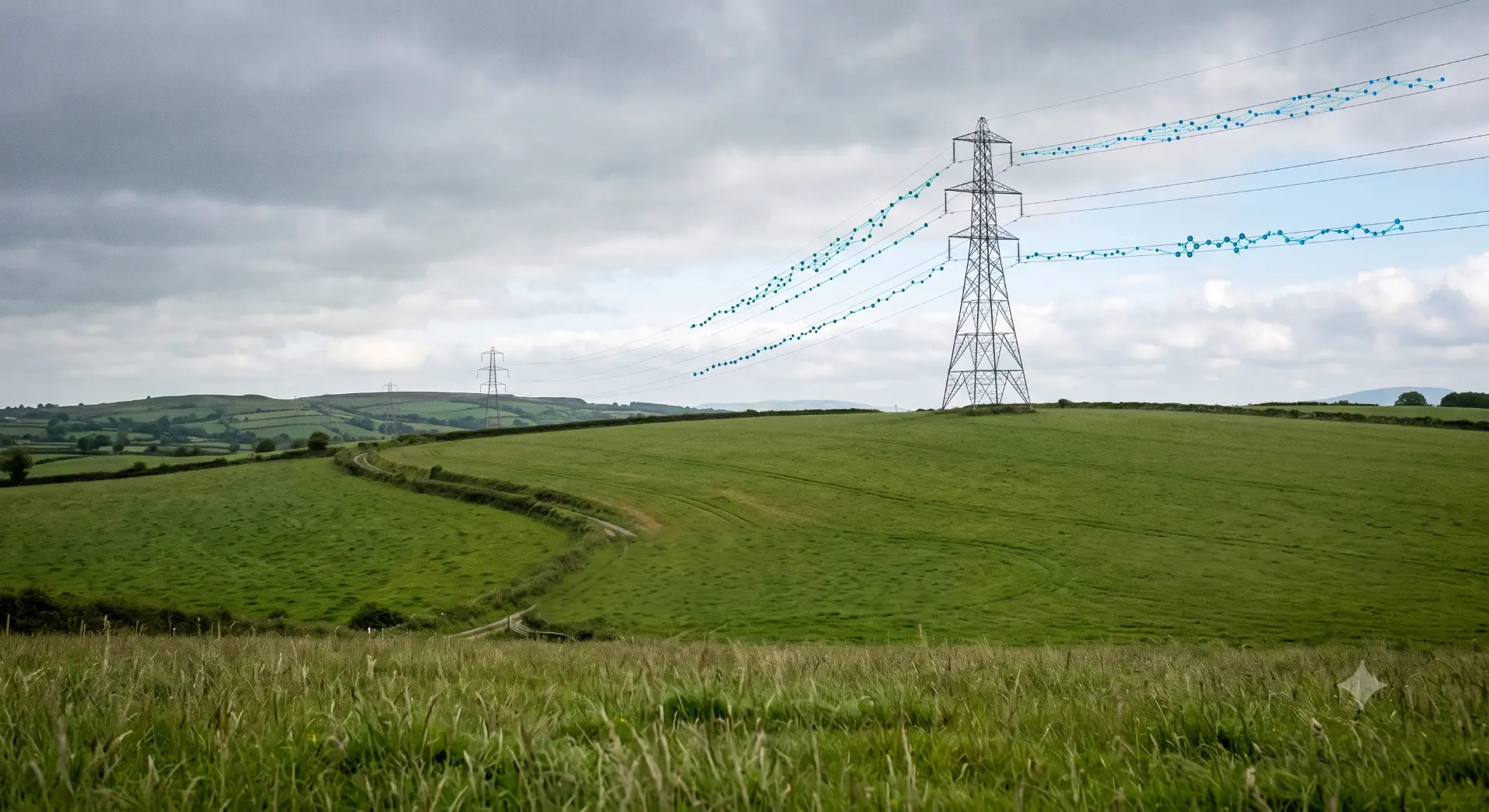
Minister for Climate, Energy and the Environment Darragh O'Brien announced on 29 July the commencement of a White Paper on Ireland's power sector, covering electricity generation, transmission, distribution and regulation, and setting the long-term vision for the sector to 2050 in service of Ireland's 2050 obligation of climate neutrality in the European Union [Dept of Climate, Energy and the Environment, 29 July 2026]. The Department states that the White Paper will provide a framework for future policy development, legislation and investment, and that it will rest on systems-level analysis of risks, scenarios, supply and demand, the grid and governance. The work follows the International Energy Agency's Powering Ireland's Energy Future report, which called for a unified cross-sectoral strategy, and it will operate within the National Energy and Climate Plan, the Climate Action Plan and the National Energy Demand Strategy. A governance structure with an external advisory group drawn from the energy and enterprise sectors will steer the process, and the Minister invited stakeholders across Government and the public, private and voluntary sectors to take part.
The stakes: A White Paper anchored in scenario and supply-demand analysis becomes the reference against which every downstream decision is measured, from renewable procurement to grid investment to the role of gaseous fuels. It sets the demand picture that a surge in electric vehicles, industry and data centres is reshaping, with data centres already accounting for 23% of metered electricity in 2025, up from 5% a decade earlier [Euronews, 29 July 2026].
Who acts? The Department of Climate, Energy and the Environment leads, with EirGrid, the Commission for Regulation of Utilities, Gas Networks Ireland, enterprise and energy stakeholders, and the external advisory group feeding the analysis.
What do they do? Contribute evidence and position to the scenarios, and shape how the plan treats firm capacity, storage, renewable gas and the interaction between the electricity and gas networks over the period to 2050.
How does Climaticus support them? Civitas by Climaticus structures stakeholder engagement across a multi-actor process of this kind, and the Custos Platform supplies the verified emissions and system data that a scenario-led plan depends on for credibility.
Section 2: Policy and regulation
2.1 The Commission's Electrification Action Plan frames the Irish White Paper
The European Commission published its Electrification Action Plan on 17 July as part of a wider package that also carried the Emissions Trading System revision and a legislative proposal on network charges [European Commission, 17 July 2026] [Linklaters]. The plan sets an indicative electrification target of 46% by 2040, to be confirmed within the post-2030 Energy Union package, and estimates that reaching it could cut the Union's fossil fuel import bill by about €260bn a year by 2040. It couples that ambition with the Grids Package, measures to speed innovative electrification, and investment in skills, and it names a decade of stalled progress at a 23% electrification rate as the problem to solve. Ireland chairs the Council through these files, which places the Irish White Paper and the European action plan on the same track.
2.2 Ireland's Renewable Heat Obligation stays in final legal review
The Renewable Heat Obligation remains among the highest legislative priorities of the Department of Climate, Energy and the Environment, with draft legislation in final legal review and the domestic biomethane multiplier already dropped after the Commission's Detailed Opinion in March 2026. The scheme would oblige suppliers of heating fuel to source 1.5% renewable energy in a first six-month year, rising to 3% in 2027 [Pinsent Masons] [Dept of Climate, Energy and the Environment].
Section 3: Energy market
3.1 EU carbon eases towards €82 after the reform rally
EU carbon allowances gave back part of the gain that followed the 17 July reform, settling at about €81.65 on 28 July after touching roughly €86 in the days after the package landed [Trading Economics] [IndexBox, July 2026]. The Carbon Border Adjustment Mechanism certificate price for the second quarter of 2026 stands at €75.28 per tonne, published on 6 July and tracking the average ETS price across the quarter [EC Taxation and Customs Union].
Section 4: Anaerobic digestion and circular bioeconomy
4.1 Biomethane's place in an electrified system becomes the sector's central question
The White Paper's demand and supply analysis will decide how renewable gas is counted in an electricity-led system, and the sector approaches that question from a small base, with Ireland running two facilities injecting biomethane to the grid and producing around 75 GWh a year, under 1.5% of the 2030 target of 5.7 TWh [IFSC]. The delivery infrastructure continues to build, with Gas Networks Ireland's €32m Central Grid Injection facility at Mitchelstown under construction and designed to inject up to 700 GWh a year, about 12% of the 2030 target, and with the network operator having sought expressions of interest from producers to supply it, with submissions due by 12 July 2026 [Bioenergy Insight] [Gas Networks Ireland].
4.2 Biogenic carbon dioxide moves from vent to feedstock
Every cubic metre of biogas upgraded to biomethane releases a roughly equal stream of biogenic carbon dioxide, and the sector increasingly treats that stream as a product rather than a waste. The reference case remains the Danish operation at Tønder Biogas, where European Energy, through its subsidiary Ammongas, captures, purifies and liquefies biogenic carbon dioxide at better than 99% purity with a design capacity of 48,000 tonnes a year and pipes the first volumes to the Kassø Power-to-X facility to make e-methanol, delivered from March 2025 as a working example of carbon capture and utilisation [Bioenergy Insight, 17 March 2025]. The resource is material at national scale, with the United Kingdom judged able to capture more than one million tonnes of biogenic carbon dioxide a year from anaerobic digestion and to reach about 8.3 million tonnes of capacity by 2030 [Anaerobic Digestion]. A 2025 peer-reviewed review in Sustainability set out four routes to valorise the stream, spanning in-situ conversion to methane through microbial electrolysis, hydrogenotrophic methanation with green hydrogen, enzymatic capture coupled with algae cultivation, and digestate pyrolysis with syngas biomethanation [Sustainability (MDPI), 2025].
4.3 Biochar closes the digestate loop
Biochar links anaerobic digestion to durable carbon removal by taking the digestate that a plant must otherwise manage and converting it, through pyrolysis, into a stable carbon solid with agronomic value. The clearest current exemplar is the project announced by Onnu and ReGenEarth at ReGenEarth's Sedgefield site, where agricultural residue feeds an anaerobic digester, the digestate is dried with renewable heat drawn from the pyrolysis step, and two Onnu CarboFlow units target an annual removal capacity of 4,300 tonnes of carbon dioxide equivalent alongside 2,266 tonnes of biochar and 2.8 MW of recoverable heat [Carbon Herald]. Public research funding is building the evidence in parallel, with the University of Nottingham leading a £4.5m demonstrator among five UK Research and Innovation greenhouse-gas-removal projects, and with Invica Industries, formerly Coal Products Limited, awarded £5m under Phase 2 of the same programme to prove large-scale conversion of anaerobic digestion biowaste into biochar [University of Nottingham].
The Biogenia Marketplace provides structured commercial intelligence on biomethane, biogenic carbon dioxide and biochar offtake, feedstock and grid-connection opportunities across Ireland and the EU.
Section 5: Carbon, MRV and climate claims
5.1 The CRCF meets its ETS-integration deadline as removals enter the market
The Commission carried a statutory deadline of 31 July to assess how permanent removals could be integrated into the Emissions Trading System, and its 17 July revision answered that mandate ahead of the date by bringing permanent removals into the trading system for the first time and aligning the cap with the 90% net emissions reduction target for 2040, with removals certified under the EU Carbon Removal Certification Framework and matching allowances issued from 2031 [ICAP] [Regreener]. The certification architecture is now in place, after the Commission adopted the first methodologies on 3 February 2026 under the QU.A.L.ITY criteria of quantification, additionality, long-term storage and sustainability, setting a 200-year permanence threshold and a five-year recertification cycle for biochar carbon removal and bioenergy with carbon capture and storage [European Commission, 3 February 2026]. Puro.earth has since opened a CRCF programme to certify eligible credits across the three approved permanent methodologies of biochar, bioCCS and direct air capture with storage under Delegated Regulation (EU) 2026/285 [Carbon Herald].
5.2 The academic evidence base for biochar strengthens on permanence and yield
Peer-reviewed work published across 2026 firms up the two claims that a biochar removal credit rests on, that the carbon stays in the ground and that the soil benefits are real. A study in the Proceedings of the National Academy of Sciences analysed 29 long-term field experiments running four to twelve years and found that repeated annual biochar application sustains and can enhance the gains in crop yield, greenhouse gas mitigation and soil organic carbon, with moderate rates near 11 to 22 tonnes a hectare combined with mineral nitrogen delivering the most consistent yield benefit and the highest rate near 44 tonnes a hectare offering no clear advantage [PNAS, 2026]. A 2026 paper in Frontiers in Sustainable Food Systems reported that biochar effects on soil organic carbon and acidity amelioration persist a decade after a single application, and a review in npj Materials Sustainability placed the global sequestration potential of soil-applied biochar between 0.7 and 1.8 gigatonnes of carbon dioxide equivalent a year [Frontiers in Sustainable Food Systems, 2026] [npj Materials Sustainability, 2025].
5.3 Carbon credit demand lags the removal ambition
The market that these credits will clear into is still forming. Carbon credit retirements fell 7% across 2025 even as corporate climate commitments rose, and carbon dioxide removal accounted for about 5% of credits retired, which leaves most organisations holding 2030 goals yet to begin removal procurement [Carbon Direct]. The European framework is meanwhile scaling the supply side, planning to fund purchases against the auctioning of 250 million allowances and to auction at least 48 million removal allowances by 2040 [Carbon Credits].
Section 6: Agriculture and Scope 3
6.1 The 2028 nitrates conditions sharpen the case for anaerobic digestion
Ireland's nitrates derogation runs on the three-year extension the European Commission granted from 1 January 2026, and 6,797 farmers applied by the closing date of 15 May 2026 [Teagasc] [DAFM]. The extension carries conditions that bite in 2028, when slurry storage requirements tighten for dairy farmers, derogation farm fertiliser limits reduce, and buffer strip requirements widen on some holdings, against a backdrop of surface water nitrate levels among the highest in Europe in the 2020 to 2023 reporting period.
Section 7: Planning and social licence
7.1 The absence of national planning guidance for anaerobic digestion persists
Ireland still has no national planning guidelines specific to anaerobic digestion or biomethane facilities, which leaves applications assessed inconsistently from one local authority to another [Arthur Cox]. Recent Irish decisions show both routes through that uncertainty, with Mayo County Council granting permission in 2024 for a 90,000-tonne plant near Ballinrobe now under construction, and An Coimisiún Pleanála overturning a local refusal to allow a grid-injection project to proceed [Agriland].
Section 8: Commercial opportunities
The Department invited stakeholders across the public, private and voluntary sectors to engage as the White Paper develops, with an external advisory group and a governance structure now forming. Producers and technology providers should position renewable gas within the demand and supply analysis early. [Dept of Climate, Energy and the Environment]
The €32m facility under construction is designed to inject up to 700 GWh a year, and the network operator has been building its producer supply base. Producers within the catchment should engage on connection and offtake terms. [Gas Networks Ireland]
Secured through the National Development Plan process, a second round of anaerobic digestion capital grants is in design and expected to open from late 2026, running to 2030. Developers should prepare bankable documentation now. [Gasworld]
With the certification methodologies adopted and Puro.earth's CRCF programme open, producers of biochar from digestate and of captured biogenic carbon dioxide can begin building certifiable removal projects. Anaerobic digestion operators should assess digestate pyrolysis and carbon dioxide capture against the QU.A.L.ITY criteria now. [Carbon Herald]
The Tønder to Kassø route shows liquefied biogenic carbon dioxide feeding e-methanol production. Upgraders should map potential offtakers in fuels, food-grade and materials markets rather than vent the stream. [Bioenergy Insight]
Deadline 22 September 2026, covering bio-based value chains, circular bioeconomy and agri-food systems. [CBE JU]
Pre-registration is open for the summit at the Convention Centre Dublin during Ireland's EU Presidency. [GBS 2026]
Section 9: Implications for Climaticus and its partners
A systems-level plan to 2050 becomes the reference for every downstream decision on generation, grid and gaseous fuels. Civitas by Climaticus structures the stakeholder engagement that a multi-actor consultation of this scale requires, and it positions renewable gas within the demand analysis while the framing is still open.
The Irish White Paper and the European Electrification Action Plan share a premise and a gap, and biomethane and biogenic carbon dioxide live inside that gap. Partners should bring evidence on firm and hard-to-electrify demand so that renewable gas reads as a complement rather than a residual.
The Mitchelstown facility removes the requirement for each plant to sit beside its own suitable grid connection, which changes project economics for farm-scale producers. Partners in the catchment should map connection and offtake now, supported by the commercial intelligence in the Biogenia Marketplace.
Bringing certified removals into the carbon market raises the premium on MRV quality for every producer of biogenic carbon dioxide. The Custos Platform provides the verification that a removals-integrated ETS makes increasingly valuable, and that separates a saleable carbon asset from a stranded one.
With CRCF methodologies adopted and the academic evidence on permanence and yield now dated and replicated, digestate pyrolysis to biochar converts a disposal cost into a certifiable removal credit and a soil product. Partners should evaluate the Sedgefield configuration against their own digestate strategy, with Custos verification underpinning any credit claim.
The 2028 tightening turns slurry management into a driver for anaerobic digestion, and the same feedstock answers a farm nutrient question and a buyer's Scope 3 question at once. Custos monitoring lets the buyer claim the reduction with confidence, which keeps value inside the agricultural supply chain.
Sources cited in this issue
- Department of Climate, Energy and the Environment, Minister O'Brien embarks on key White Paper, 29 July 2026: gov.ie
- Euronews, Ireland unveils blueprint to electrify economy by 2050, 29 July 2026: euronews.com
- European Commission, A plan to make Europe the first electro-continent, 17 July 2026: commission.europa.eu
- Linklaters, Commission publishes Electrification Action Plan: sustainablefutures.linklaters.com
- Trading Economics, EU carbon permits price: tradingeconomics.com
- IndexBox, European carbon prices fluctuate in July 2026: indexbox.io
- EC Taxation and Customs Union, CBAM certificate prices: taxation-customs.ec.europa.eu
- Pinsent Masons, RHO as a market signal for Irish biomethane: pinsentmasons.com
- Department of Climate, Energy and the Environment, Renewable Heat Obligation: gov.ie
- ICAP, EU Commission publishes EU ETS review proposal: icapcarbonaction.com
- Carbon Market Watch, Commission waters down flagship climate policy, 17 July 2026: carbonmarketwatch.org
- IFSC, Ireland committed to 5.7 TWh of indigenous biomethane by 2030: ifsc.ie
- Bioenergy Insight, Construction begins on Gas Networks Ireland's €32m biomethane facility: bioenergy-news.com
- Gas Networks Ireland, Expressions of interest for Mitchelstown Central Grid Injection facility: gasnetworks.ie
- Teagasc, Nitrates Derogation: teagasc.ie
- Department of Agriculture, Food and the Marine, Minister Heydon on continued availability of the Nitrates Derogation: gov.ie
- Arthur Cox, Biomethane: guide to project development in Ireland: arthurcox.com
- Agriland, Mayo County Council grants planning for anaerobic digestion plant: agriland.ie
- Gasworld, Ireland attracts €200m funding for AD plants and issues €19m biomethane grants: gasworld.com
- CBE JU, €170.7m 2026 call: cbe.europa.eu
- Global Bioeconomy Summit 2026: gbs2026.org
- Bioenergy Insight, First biogenic CO2 delivered from Tønder Biogas to Kassø Power-to-X facility, 17 March 2025: bioenergy-news.com
- Anaerobic Digestion, A guide to biogenic carbon capture using biomethane: anaerobic-digestion.com
- Sustainability (MDPI), Technological approaches for the capture and reuse of biogenic carbon dioxide towards sustainable anaerobic digestion, 2025: doi.org/10.3390/su172210385
- Carbon Herald, Onnu and ReGenEarth to launch a landmark pyrolysis project in the UK: carbonherald.com
- University of Nottingham, Biochar to remove carbon: nottingham.ac.uk
- European Commission, EU sets world's first standard for permanent carbon removals, 3 February 2026: climate.ec.europa.eu
- Carbon Herald, Puro.earth launches new CRCF programme: carbonherald.com
- Regreener, CRCF certified carbon credits buyer's guide: regreener.earth
- PNAS, Sustained benefits of long-term biochar application for food security and climate change mitigation, 2026: pnas.org
- Frontiers in Sustainable Food Systems, Biochar effects on soil organic carbon sequestration and acidity amelioration persist after 10 years, 2026: frontiersin.org
- npj Materials Sustainability, Use of biomass-derived biochar as a sustainable material for carbon sequestration in soil, 2025: nature.com
- Carbon Direct, Key trends in the 2026 voluntary carbon market: carbon-direct.com
- Carbon Credits, EU sets global benchmark for permanent carbon removals and carbon farming: carboncredits.com
- Sylvera, Carbon market trends 2026: sylvera.com
- Climaticus governance: climaticus.ie/stakeholder-centred-governance

Keeping up with Climaticus
Sign up to receive a monthly newsletter with the most important news and research from the briefings and beyond.
Your email will be used only to send the Climaticus monthly newsletter. You can unsubscribe at any time.